Renovating a Bathroom in Kensington: What Homeowners Should Consider
23 September 2026
Renovating a bathroom in Kensington requires more than choosing new tiles and fittings. From period properties and compact flats to plumbing, waterproofing and access, discover what homeowners should consider for a well-planned, lasting bathroom renovation.
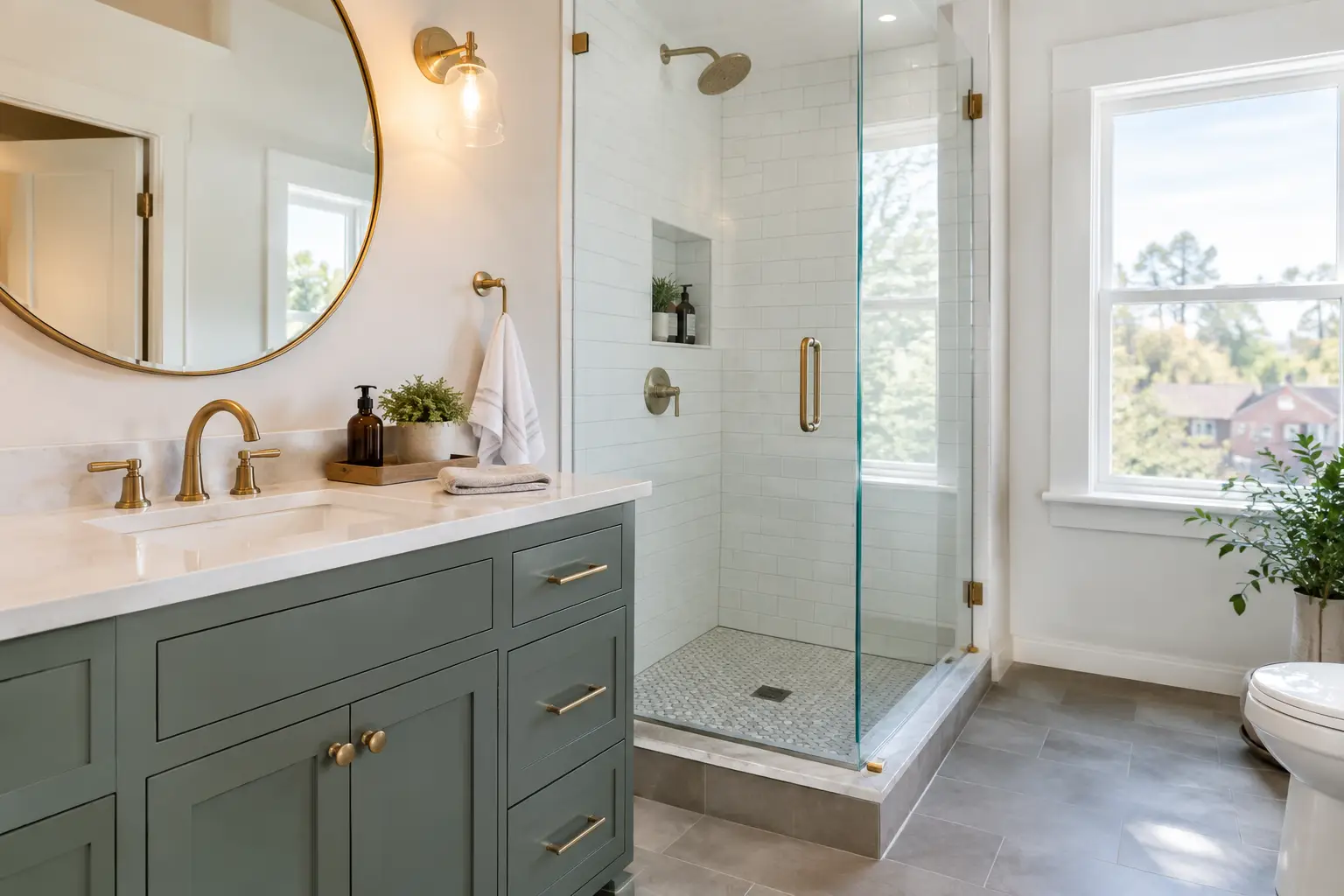
Renovating a bathroom in Kensington is rarely just a matter of replacing tiles and fittings. The property itself often shapes the work involved. A period home may have ageing pipework and uneven walls, while a flat may involve building-management requirements, shared service routes and restricted access.
A well-managed bathroom renovation in Kensington should account for these practical details before work begins, helping to protect both the finished result and the construction programme.
Whether you're updating a compact bathroom in a Kensington flat or refurbishing a larger bathroom within a period property, good preparation is just as important as the finishes you choose.
Start with the existing bathroom and how you use it
Before choosing tiles, brassware or sanitaryware, consider how well the existing bathroom works for your household.
Is storage limited? Is the shower difficult to use? Does the existing position of the bath, WC or basin make the room feel unnecessarily cramped? Are there plumbing or ventilation issues that should be addressed as part of the renovation?
In a compact Kensington flat, features such as a wall-hung WC, recessed mirrored cabinet or appropriately positioned shower can help make better use of the available space. Homeowners working with restricted rooms may also find our guide to small bathroom renovation in London useful.
In a larger family bathroom, priorities may be different, with more emphasis on storage, separate bathing and showering areas or additional sanitaryware.
Changing the position of existing sanitaryware may sometimes be possible, but this depends on factors such as drainage, soil-pipe positions, floor construction and available routes for plumbing.
The aim should be a bathroom that is practical for everyday use and appropriate for the property.
Understand the Kensington property before work starts
Kensington contains a wide variety of residential properties, from period houses and converted buildings to mansion blocks and modern apartments.
That variety means two bathrooms only a few streets apart can present very different construction requirements.
Older properties may reveal uneven substrates, ageing pipework, previous alterations or floors and walls requiring additional preparation once existing finishes are removed.
Flats can introduce a different set of considerations, including communal access, shared services, building-management requirements and restrictions on when certain work can take place.
If the bathroom forms part of a larger property refurbishment, our home renovations in Kensington page provides more information about renovating homes in the area.
Understanding the property before the main installation begins makes it easier to establish a realistic scope and reduces the likelihood of avoidable surprises later.
Check permissions and building requirements early
Internal bathroom renovation does not generally involve the same planning considerations as an extension or significant external alteration. However, homeowners should still establish whether any property-specific permissions or requirements apply.
Leaseholders may need to check the conditions set by their freeholder or managing agent, particularly where plumbing positions are changing, communal water supplies need to be isolated, access is restricted or working hours are controlled.
Listed properties can require additional consideration where proposed work could affect protected historic fabric.
In flats, waterproofing and the relationship with neighbouring properties are particularly important. A bathroom or shower room positioned above another residence needs careful preparation and installation.
Electrical work in bathrooms must comply with the relevant safety requirements and bathroom zones, while adequate ventilation is important for controlling moisture and condensation.
These elements may be less visible than the final tiles and fittings, but they can have a significant influence on how well the completed bathroom performs.
Plumbing and waterproofing come before the finishes
Much of the most important work in a bathroom eventually disappears behind the finished surfaces.
Removing an existing bathroom can expose pipework, drainage connections, subfloors and wall backgrounds that have been hidden for years.
Their condition should be assessed before new finishes cover them again.
Where plumbing alterations form part of the agreed scope, they should be coordinated with the positions of the sanitaryware and fittings being installed. Wet areas also require appropriate preparation and waterproofing before tiling progresses.
Getting these stages right is fundamental to a lasting bathroom renovation. Expensive tiles, brassware and sanitaryware cannot compensate for inadequate preparation underneath.
For a broader overview of complete bathroom refurbishment work, see our bathroom renovations in London service page.
Choose materials that suit the property and everyday use
The quality of a finished bathroom depends on installation and preparation as much as the products selected.
Tiles need suitable, properly prepared backgrounds. Shower areas require careful waterproofing and installation. Concealed plumbing and valves should also be considered with future maintenance in mind.
Small inaccuracies become particularly noticeable once large-format tiles, fitted furniture, mirrors and other final finishes are installed.
It therefore helps to make key product and material selections before the construction programme reaches the relevant stage.
Depending on the project, these selections may include sanitaryware, tiles, brassware, vanity units, worktops, mirrors, lighting and heated towel rails.
Lead times can vary, particularly for specialist or made-to-order products. Having the required items available at the appropriate stage can help avoid unnecessary disruption to the programme.
Older Kensington properties can also reveal hidden conditions once existing finishes are removed, including deteriorated pipework, damaged substrates or walls and floors requiring additional preparation.
A clear quotation should explain the agreed scope, while any additional work arising from previously concealed conditions should be discussed before proceeding.
Renovating a bathroom in an occupied Kensington property
Many bathroom renovations take place while homeowners continue living in the property.
That makes site organisation particularly important.
Access routes through finished areas may need protection. Materials and waste need to be moved carefully, and the working area should be managed to reduce unnecessary disruption to the rest of the home.
In Kensington flats and apartment buildings, contractors may also need to work around communal entrances, staircases, lifts, permitted working hours and requirements established by the building manager.
Neighbours are another consideration, particularly where properties share walls, floors and communal areas.
These practical details do not change the appearance of the finished bathroom, but they can make a considerable difference to the experience of having the work carried out.
Why coordinated trades matter during a bathroom renovation
A complete bathroom renovation can involve several trades and stages of work.
Depending on the agreed scope, these may include strip-out, plumbing, electrical work, preparation, plastering, waterproofing, tiling, carpentry, sanitaryware installation and decorating.
The challenge is not simply finding people capable of carrying out each individual task. The work also needs to happen in the correct sequence.
Plumbing and electrical work, for example, may need to be completed before walls and floors are prepared for subsequent finishes. Tiling needs appropriate backgrounds, while sanitaryware and final fittings should be installed at the correct stage of the programme.
For homeowners comparing contractors, our guide to choosing a bathroom renovation contractor in London covers further points worth considering.
Clear communication throughout the renovation is equally important. Homeowners should understand what has been completed, what happens next and whether any newly discovered conditions affect the agreed scope.
What should you ask before renovating a bathroom in Kensington?
Before appointing a contractor, it is worth establishing exactly how the proposed work will be approached.
Useful questions include:
What work is included within the quotation?
Does the quotation include removing the existing bathroom?
Will existing plumbing need to be altered or replaced?
How will shower and other wet areas be prepared and waterproofed?
Who will coordinate the different trades?
How will access and waste removal be managed?
Are there restrictions imposed by the freeholder or building manager?
What happens if hidden pipework or damaged substrates are discovered?
How will additional work or variations be agreed?
What happens during final checks and snagging?
These questions can make it easier to compare quotations based on the actual scope and delivery of the project rather than the headline price alone.
From strip-out to the finished bathroom
Although every property and scope is different, a complete bathroom renovation typically progresses through a series of connected stages.
Existing fittings and finishes are removed first where required. The exposed areas can then be assessed before plumbing and electrical work progresses according to the agreed specification.
Walls and floors are prepared, wet areas are waterproofed where required, and tiling and other finishes can then follow.
Sanitaryware, brassware, furniture and other fixtures are installed at the appropriate stages before decorating, final connections, checks and snagging.
Following a logical sequence helps reduce the risk of completed work being disturbed by trades that should have attended earlier.
Creating a bathroom that works for the property
A successful bathroom should feel straightforward once it is finished: comfortable to use, practical to maintain, properly ventilated and appropriate for the household.
In Kensington, achieving that result often starts with understanding the property itself.
Period construction, existing plumbing, compact layouts, apartment-building requirements and restricted access can all influence how a bathroom renovation is carried out.
Taking time to assess those conditions, establish a clear scope and coordinate the work properly gives the finished bathroom a stronger foundation than focusing on appearance alone.
KK Construction London Ltd carries out bathroom renovation work across Kensington and London, coordinating the construction and installation stages according to the agreed project scope. Where plans, drawings or specifications are required for a project, we work from client-supplied information rather than providing architectural or interior design services.
If you're considering a bathroom renovation in Kensington, send us your photos, plans or project details for a free, no-obligation quote.